

Choice between cinema or pub causing headache for finance ministerShareSavePatrick FeeBBC News NI business correspondentShareSave

 PA Media
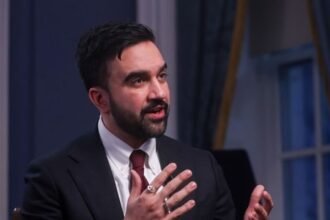
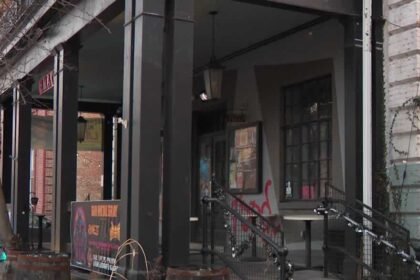
The choice between the cinema and the pub might sound like a decision for a Friday night, but for Finance Minister John O'Dowd it is a painful choice between a rock and a hard place.
A recent U-turn on business rates saw him announce a pause of the Reval 26 revaluation process, which threatened to leave pubs and hotels with sharp rates increases.
The pause itself is now coming under scrutiny and has been described as "a dangerous precedent" by a UK-wide business rates body, with the potential to "destroy" the principle of a fair system.
Omniplex, Northern Ireland's biggest cinema chain, said the recent move means it lost out on saving almost half a million pounds on its annual rates and it is now taking legal action to force the minister to push through the rate reforms.
Paul Anderson, who heads up the company, said 13 of his 15 cinemas had seen their rates bills fall in the draft outcome of Reval 26.
He estimates hotels and publicans make up just 2% of rate-payers but had a disproportionate voice in the discussions.
Anderson said ratepayers from the hospitality sector had been listened to at the expense of other businesses.
"The other 98% of businesses don't have a voice at the minute," he said.
"I'm not taking swipes at anyone, they're doing what they need to do. It's just a disproportionate reaction to pause for all rate-paying businesses.
"Pausing the Reval is of benefit to a small number. The unintended consequence is ourselves."
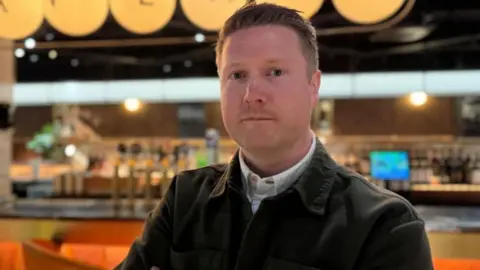
Anderson's solicitors have issued a pre-action letter, notifying the Department of Finance of his intention to begin legal proceedings to compel the minister to overturn his decision to pause Reval 26.
In a statement, the Department of Finance said it "has received legal correspondence in relation" to its rates decision and that it would not be appropriate to comment.
The finance minister previously said the pause was intended to ensure the rates system was "fair and equitable for all businesses".
How do revaluations work?
The process is revenue neutral – it is not about raising extra revenue.
It is about working out what share of the total rates revenue each business should pay.
While some businesses would see increases, others would see rates fall.
The revaluation process for business rates happens every three years, intended to ensure that the rateable value of a business is up to date.
The rateable value of a property is worked out using its Net Annual Value (NAV).
NAV is an assessment of the annual rental value that the property could reasonably be let for at a fixed point in time.
The NAV is multiplied by the "rate in the pound" to produce the annual bill.
What impact would this revaluation have had?
Reval 26 saw a big change for some sectors.
Hotels overall have had an 84% increase in their total valuations, while pubs' valuations have risen by 47%.
Land and Property Services (LPS) said the significant change reflects factors including improved conditions since the Covid-19 pandemic, as well as expansions and improvements to premises.
Industrial and warehousing values have risen by about 16%, which is seen as the result of strong demand from logistics and manufacturing as well as limited supply.
Without these increases, LPS said that rates remain unfairly generous to hospitality, reflecting discounts from the Covid pandemic.
Why did O'Dowd change his mind?
 Getty Images
The draft outcome of the Reval 26 process was published at the end of January.
Those draft outcomes left some businesses facing huge rises, particularly those in hospitality.
Those increases sparked a backlash that led to the minister pausing the process.
He said he wanted to ensure local businesses were being supported, and it was clear some sectors felt the revaluation had been unfair.
The hospitality sector has long been critical of the broader rates system, including the method used to calculate its valuations.
Chief Executive of Hospitality Ulster Colin Neil said his membership have "no confidence" in LPS following the draft outcomes of Reval 26.
He said the increases threatened by the revaluation process would have been the "death knell" for the industry, with publicans claiming it would have seen pint prices increase.
What's the problem for cinemas and other businesses?
Some businesses would have seen their rates fall had Reval 26 not been paused, including 13 of Omniplex's 15 cinemas.
Sharon Gallagher, head of LPS, appeared before Stormont's finance committee the day before the minster's U-turn on business rates, telling members that any pause in the implementation of Reval 26 would be "unfair to other businesses".
Asked about this statement after announcing the pause, John O'Dowd told BBC News NI that "the basis of the rates system has to be fairness" but he wanted to "dial down the atmosphere to allow constructive engagement to take place".
"In any rates delivery there are going to be people who feel they have lost and people who feel they win, and people in the middle."
What's next?
Omniplex said its legal challenge is now under way.
No court date has been set, but it hopes proceedings will be wrapped up in the coming weeks to allow for any potential impact on the business rates bills due to land on doorsteps at the beginning of April.